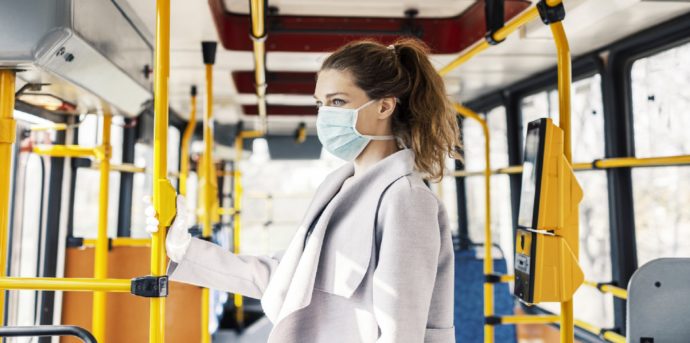
In these months of painful and enforced isolation, we have all noticed the drastic drop in pollution. We ventured out (strictly with gloves and masks) by car to do groceries and traveled on deserted roads on our way to the supermarkets.
The sky is bluer, PM10 levels have drastically fallen, and we now face a new challenge: avoiding the mistakes of the past and recommitting to public transport.
The risk is that safety measures might lead us back to the compulsive use of private cars based on the mistaken belief that individual transport exposes us to fewer risks than public transport. This mechanism must certainly be dismantled.
The public transport sector will emerge profoundly transformed from this COVID-19 crisis; public policies and business decisions are rapidly adapting to the new situation.
The challenge is to RESTORE CITIZEN CONFIDENCE IN HEALTH MONITORING ON BUSES, TRAMS, AND METROS, AND THIS IS NOT ONLY POSSIBLE BUT IS A CURRENT ISSUE THANKS TO TECHNOLOGY.
TAPMYLIFE, with its established experience in localization, tracking, and process optimization within healthcare facilities, has developed an INNOVATIVE SYSTEM FOR TRANSPORTATION as well, using automatic vision systems and artificial intelligence.
Transport companies can monitor in real time body temperature, movements, presence, crowd levels, use of prevention devices (PPE and masks), and access to restricted areas, ensuring MAXIMUM SAFETY on their vehicles.
This system can detect OVERCROWDING by defining the capacity of each available space (transport vehicles as well as platforms, halls, common areas, and company cafeterias), and provides an alert when the maximum number of people is reached.
The solution, appropriately integrated with queue management systems, allows for compliance with the most stringent safety regulations through automatic, cost-effective, and efficient control.
Dynamic area management also indicates public access times to verify any unauthorized presences during closing hours.
Data is stored with full respect for privacy, creating a statistical basis for analyzing access flows from a preventive and effective live monitoring perspective for better line management.