25/05/2019

Desio Hospital: Patient with Electronic Bracelet in Operating Room
This way, family members can view the stages of the procedure

Monza, May 25, 2019 – Since May 16, the Desio branch of ASST Monza has launched two new projects aimed at organizational efficiency and patient safety: the operating time communication system and the digital operating room checklist. The first project aims to promptly inform the patient’s family and companions about the progress of the surgical operation. Each patient, represented by an anonymous code on a multimedia monitor in the operating block waiting room, can have the stages of the intervention displayed in real-time. Specifically, the entry time into the operating block and the entry and exit times from the operating room are visible.
“It greatly reduces anxiety for us family members,” says a woman in the waiting room, “and I think it’s better for the doctors too, as it avoids a rush of people hunting for information.” The ability to display surgical times on monitors has been made possible by the automatic patient position tracking system, using Bluetooth technology embedded in a bracelet.
The ASST Monza initiative is the first example in the public hospital sector in Lombardy of automatic position detection using this technology. The tracking and communication of operating room times serve both managerial purposes, related to the efficiency of surgical patient logistics, and communication and transparency towards patients. The system applies to all patients undergoing elective or emergency surgery in the hospital’s seven operating rooms (an average of 7,000 operations are performed annually in Desio).
The second project, the digital checklist, also applies to all surgeries and operating rooms in the Desio hospital and aims to reduce risks: shared guidelines and protocols to eliminate and limit clinical errors. Specifically, the project involved the complete digitization of the operating room checklist. “Through processes of innovation, managerial simplification, and document dematerialization,” says Luigi Messina, a management engineer at ASST Monza, “the Desio hospital is moving towards a better use of healthcare resources, which means more efficiency, or more availability of care for patients, in a technologically advanced and maximally safe environment.”
“This is another innovation,” states General Director Mario Alparone, “that we are introducing to provide digital services dedicated to patient safety and to simplify the relationship with the organization. We have employed new technologies to put ourselves in the citizen’s perspective and improve the real and perceived quality of interaction with healthcare facilities».


New Projects for Surgical Activities at Desio Hospital
(mi-Lorenteggio.com) Desio, May 24, 2019 – Since May 16, the Desio branch of ASST Monza has launched two new projects aimed at improving organizational efficiency and patient safety: the operating time communication system and the digital operating room checklist.
The first project aims to promptly inform family members and patient companions about the progress of the surgical procedure. For each patient, represented by an anonymous code on a multimedia monitor in the waiting room of the operating block, the stages of the intervention are displayed in real-time. Specifically, the entry time into the operating block and the entry and exit times from the operating room are visible.
The ability to display surgical times on monitors has been made possible by an automatic patient position tracking system using Bluetooth technology. ASST Monza’s initiative is the first example in the public hospital sector in Lombardy of automatic position detection using this technology. The tracking and communication of operating room times serve both managerial purposes, related to the efficiency of surgical patient logistics, and communication and transparency towards patients.
The system applies to all patients undergoing elective or emergency surgery in the hospital’s seven operating rooms.
The second project, the digital checklist, is also applied to all surgeries and operating rooms in the Desio hospital and aims to reduce risks. Among hospital services, the operating room is certainly one of the most critical, and therefore ASST Monza studies and introduces shared guidelines and protocols to eliminate and limit clinical errors.
Specifically, the project involved the complete digitization of the operating room checklist. This includes a set of controls in three phases (Sign In, Time Out, Sign Out) to be performed during the surgical procedure. The computer stations in the hospital’s operating block have fields to fill out, making the checklist a dynamic document that follows the patient from entry to exit from the operating room and records the required checks at specific times.

The support of IT has transformed the checklist, formerly paper-based, into a crucial tool for prevention as recommended by the World Health Organization (WHO) and adopted in Italy by the Ministry of Health with “The Manual for Safety in the Operating Room.”
“Through processes of innovation, managerial simplification, and document dematerialization,” says Luigi Messina, a management engineer at the Operational Management Service of ASST Monza, “Desio Hospital is moving towards a better use of healthcare resources, which means more efficiency, or more availability of care for patients, in a technologically advanced and maximally safe environment.”
Among the benefits of these solutions are the reduction of adverse events in the operating room, simplification of activities, improved communication among professional groups, reduced costs for legal expenses, availability of a real-time updated computerized database, and the sharing of information, opinions, and practices.
“This is another innovation,” states Mario Alparone, General Director of ASST Monza, “that we are introducing to provide digital services dedicated to patient safety and to simplify the relationship with the organization. We have employed new technologies to view things from the patient’s perspective and improve the actual and perceived quality of interaction with healthcare facilities. The strategic goal is to humanize the hospital and make surgical interventions transparent and safe, alleviating waiting times and facilitating communication between companions and hospital services.”
24/05/2019

At the Piacenza Local Health Authority, the Innovation in Digital Healthcare Award from the Politecnico di Milano
The National Observatory “Digital Innovation in Healthcare” of the Politecnico di Milano awarded the Piacenza Local Health Authority first place in the Digital Healthcare Innovation Award 2019 for the project developed in collaboration with the Italian Union of the Blind and Visually Impaired of Piacenza, TapMyLife srl, and in partnership with Artexe, which handled the integration with the queue management systems. The project features a smartphone application that provides a valuable solution for indoor navigation within hospital facilities, guiding visually impaired and blind individuals within Piacenza Hospital, integrating with reception systems, and allowing for independent management of wait times at services equipped with ticket dispensers.
The qualified jury, consisting of about thirty top general managers and healthcare experts from across Italy, recognized the excellence of the Piacenza AUSL project, highlighting it as a cutting-edge example in optimizing and humanizing patient and citizen services. The project, “Piacenza, My Hospital,” was awarded the Digital Healthcare Innovation Award for its approach to citizen reception.
The adoption of digital technologies and their correct integration into the Patient Journey allows for placing the citizen/patient truly “at the center” of the ecosystem, making their relationship with healthcare professionals and the health system more appropriate and sustainable. Understanding the impact of such innovations on the system and managing them properly is the key to fully reaping their benefits and addressing the major challenges of today’s and tomorrow’s healthcare.
The “Piacenza, My Hospital” project operates on these premises with an app that guides and supports users step-by-step within the city’s healthcare facility.
The smartphone app is specifically designed for people with visual disabilities and allows them to navigate to departments and services using their mobile phones. Additionally, users can book appointments at CUP counters and pharmacies thanks to the app’s integration with the hospital’s queue management kiosks.
The phone’s voiceover feature provides guidance and makes these services fully accessible to the blind and visually impaired, who have tested the app’s effectiveness alongside AUSL and the technology developer, TapMyLife, throughout all stages of development.
“Piacenza, My Hospital” can also be used by any citizen: it is useful for those visiting a hospitalized person, as well as for those needing to attend an appointment or exam. The app guides users through departments, clinics, examination areas, booking centers, and drug distribution areas, offering continuously updated information on the services provided by the hospital.
Once near the Piacenza hospital area, the app connects to a virtual reception system that allows interaction with the surrounding space.
Among the presenters of the application were Giovanni Taverna, President of the Union of the Blind and Visually Impaired of Piacenza, and Stefano Fugazzi representing Piacenza AUSL.
Giovanni Taverna, an enthusiastic supporter of the Piacenza project, highlights the importance of the co-design model implemented in Piacenza: “The Politecnico di Milano,” he notes, “has awarded the app and the accessibility project for Piacenza Hospital as an innovative development in healthcare management, largely due to the collaborative network created between Piacenza AUSL, TapMyLife, and the Italian Union of the Blind and Visually Impaired of Piacenza. The collaboration started from the design phase, given the irreplaceable contribution each component has made. The idea of using an app to guide citizens within the hospital as well as to access appointments, medications, and diagnostic services without being hindered by ticket dispensers is particularly relevant and even economically viable, as it is aimed at the entire community and not just visually impaired individuals, who are nonetheless primary users. The simplicity of use, free access, and efficiency make the app and its various functionalities absolutely indispensable.”
AUSL General Director Luca Baldino expressed satisfaction with the important recognition: “We are very proud of this award. This technology,” emphasizes General Director Luca Baldino, “is the result of a joint effort between the Company and citizens who experience the challenges of accessing healthcare services daily. We relied on those with direct experience for the design. This app highlights the concept of reception in healthcare facilities and demonstrates our focus on accessibility and disabilities. It is not a tool designed for a few but a valuable aid available to all citizens, operators, family members, and patients who access our hospital every day and can independently find and navigate to the service they need.”
22/05/2019

Low Vision App: Piacenza AUSL Wins First Prize for Digital Innovation
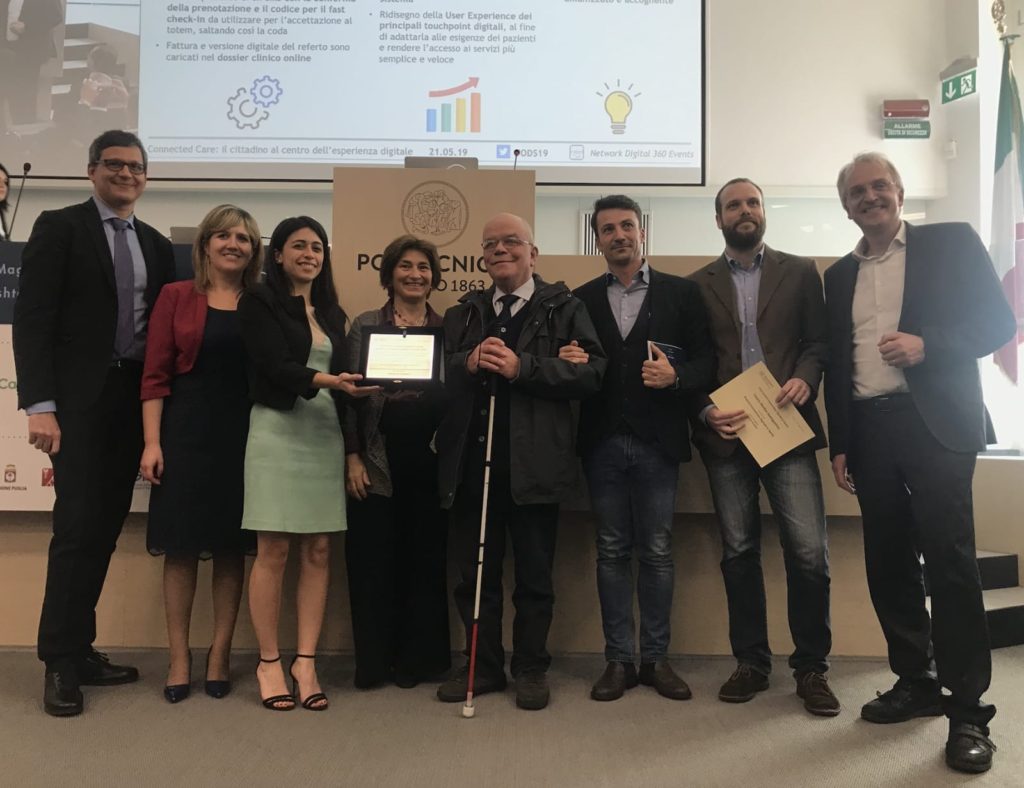
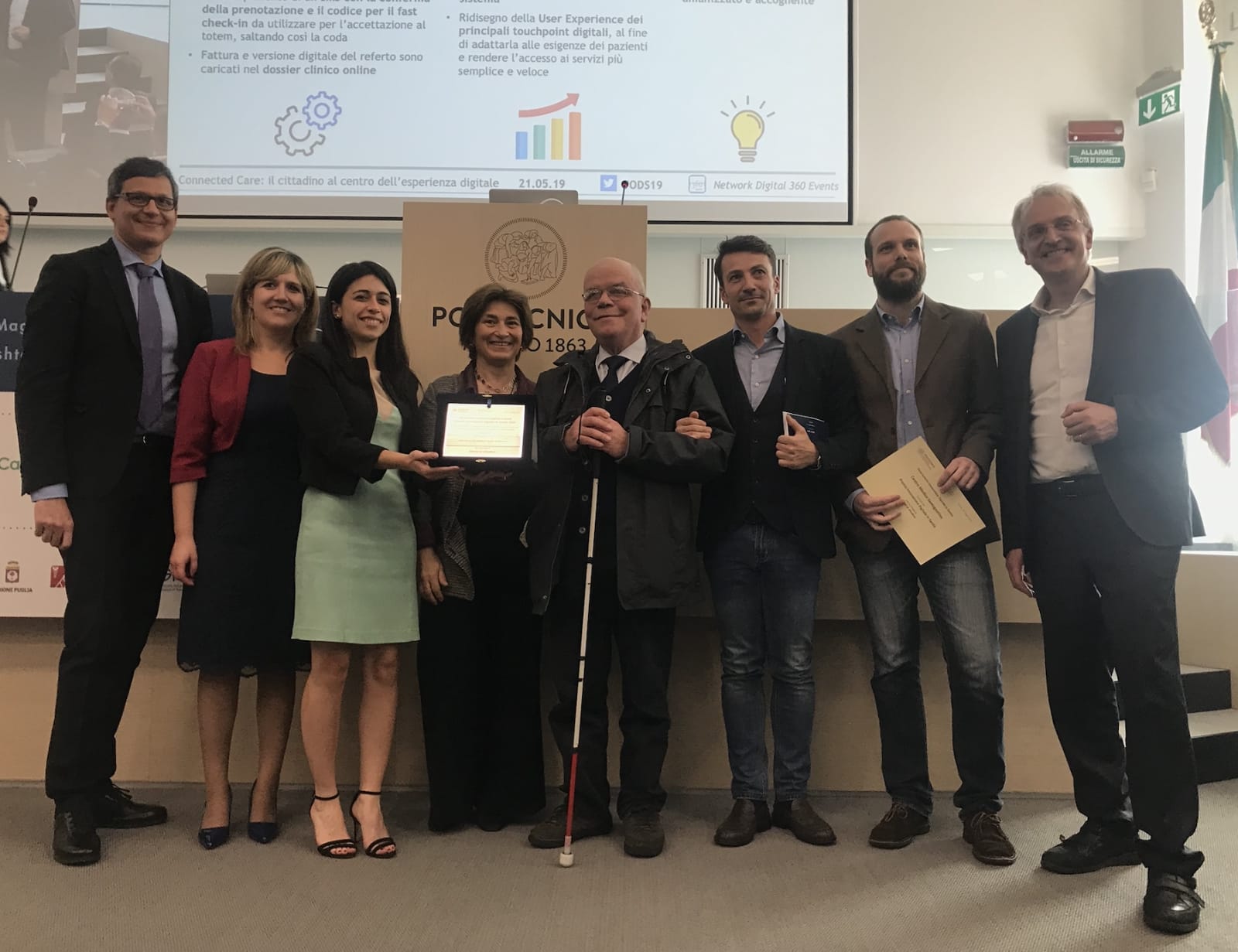
The Local Health Authority of Piacenza has been awarded the first prize for Digital Innovation in Healthcare by the Politecnico di Milano in the “Citizen Services” category. Now in its tenth edition, the award aims to create opportunities for knowledge sharing and showcasing the best digital healthcare projects in Italy for their ability to leverage digital technologies as drivers of innovation and improvement. Following evaluations by a qualified jury, the recognition was given to healthcare organizations that stood out for their use of modern digital technologies, selected from 11 finalists.
The Piacenza Local Health Authority received the award in the “Citizen Services” category for implementing indoor and outdoor navigation systems for mobile devices integrated with the hospital’s queue management systems at Piacenza Hospital “Guglielmo da Saliceto.” The project, developed with the support of Artexe, was created to facilitate orientation for all types of users accessing the facility, with a particular focus on visually impaired patients. The platform was developed in collaboration with the Italian Union of the Blind and Visually Impaired, Piacenza section.

22/05/2019

Digital Healthcare: Piacenza Awarded for Services to the Visually Impaired
An important recognition for the Piacenza Local Health Authority. On the afternoon of May 21, at the Bovisa Campus of the Politecnico di Milano during the conference “Connected Care: the Citizen at the Center of the Digital Experience,” the Health Authority was among the awardees of the tenth edition of the Digital Innovation in Healthcare Award by the School of Management at Politecnico di Milano. This award, presented by the Digital Innovation in Healthcare Observatory, aims to create opportunities for knowledge sharing and showcasing the best digital healthcare projects in Italy for their ability to use digital technologies as a driver of innovation and improvement.
Following evaluations by a qualified jury, the award was given to healthcare organizations that excelled in their use of modern digital technologies, selected from 11 finalists. The Piacenza facility was honored in the “Citizen Services” category for implementing indoor and outdoor navigation systems for mobile devices integrated with the hospital’s queue management systems at Piacenza Hospital “Guglielmo da Saliceto.”
The project, developed with the support of Artexe, addresses the need to facilitate orientation for all types of users accessing the facility, with a particular focus on visually impaired patients. The platform was developed in collaboration with the Italian Union of the Blind and Visually Impaired, Piacenza section. It supports users in reaching points of interest both in external areas, via GPS signals, and in internal areas, via Bluetooth technology, calculating the shortest path in real-time.
Visually impaired users can choose to use the voice-over mode for vocal feedback on the app’s features. The queue management totems in the facility can automatically detect users arriving with assisted navigation. Check-in and ticket number retrieval operations can be performed directly through the app, which also allows users to monitor queue progress and receive vocal alerts for their turn.
“The awarded and mentioned projects represent various examples of excellence in developing digital innovation in Italian healthcare,” explains Cristina Masella, Scientific Manager of the Digital Innovation in Healthcare Observatory. “These are cases where the use of digital technologies, often particularly innovative such as Artificial Intelligence or Augmented Reality, has improved citizen services, personalized and enhanced patient care, reduced waiting times and waste, and facilitated healthcare staff work.”
“The goal of the Award is to highlight best practices, thus generating a virtuous mechanism for sharing knowledge and successful experiences for the benefit of healthcare stakeholders across the country.”