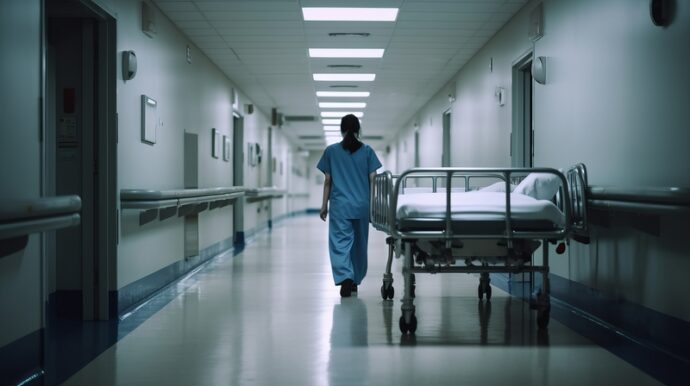
Today, May 12th, marks International Nurses Day worldwide, coinciding with the birthday anniversary of Florence Nightingale, the founder of modern nursing. Nurses play a crucial role in the healthcare system, and the importance of their role was emphatically highlighted during the pandemic by the then Director-General of the World Health Organization, Tedros Adhanom Ghebreyesus, with this unequivocal statement: “Nurses are the backbone of any healthcare system.”
However, daily reports reveal a general state of distress among these professionals, with daily incidents of aggression, particularly in increasingly crowded Emergency Departments. A survey conducted by eight universities, including the University of Genoa, on nurses who have suffered physical or verbal violence reveals that, compared to approximately 5,000 reported cases in a year, there are 26 times more, around 125,000, unreported cases. Even more alarming is that 75% of these cases involve women and approximately 40% are instances of physical violence.
Aggressions are a painful symptom of a complex situation: inadequate organizational models, inefficiencies in workflow and communication with relatives (an aspect that cannot be entirely delegated to the staff).
Returning to the initial question, are we adequately protecting the ‘backbone’ of the healthcare system? It seems not. Addressing this problem requires tailored solutions studied and implemented “on the ground.” How?
The TapMyLife Emergency Department and Staff Safety module focuses on critical aspects that create issues in the ER through an advanced platform that includes:
- Monitoring, tracking, and managing patient flow (reception – triage – consultation – specialist/diagnostic visit – discharge/admission)
- Management of localized emergency calls for staff against increasing aggression and monitoring of unguarded access points
- Management of stretcher occupancy status with map visualization of available stretchers and their precise location
- Automatic communication to relatives about the location of their loved one (and any ongoing treatments) via a dedicated caregiver app
All information, anonymized and by flow, is archived, providing certified data on patient movement, availability of medical equipment and stretchers, statistics, and useful information for hospital governance to improve the service in all its aspects.
The underlying assumption is that if we address the causes that lead to escalating tension (by providing appropriate geolocalized alarm modules with panic buttons for staff) and carefully monitor tools and flows with attention to communication with relatives, the incidence of aggression is likely to decrease significantly.
Monitoring of flows, localization, safety, and communication: these are the four key words to ensure greater protection for the ‘backbone’ of our healthcare system. Data collected over years of activity show that the introduction of security and tracking systems in Emergency Departments (as well as in other ‘critical’ areas of hospitals) leads to greater efficiency in departments and a marked increase in safety standards for staff. We are confident that by following these guidelines, the number of aggressions will decrease. The hope is that there will be a genuine commitment to recognizing the role of nursing staff every day, not just on May 12th each year.